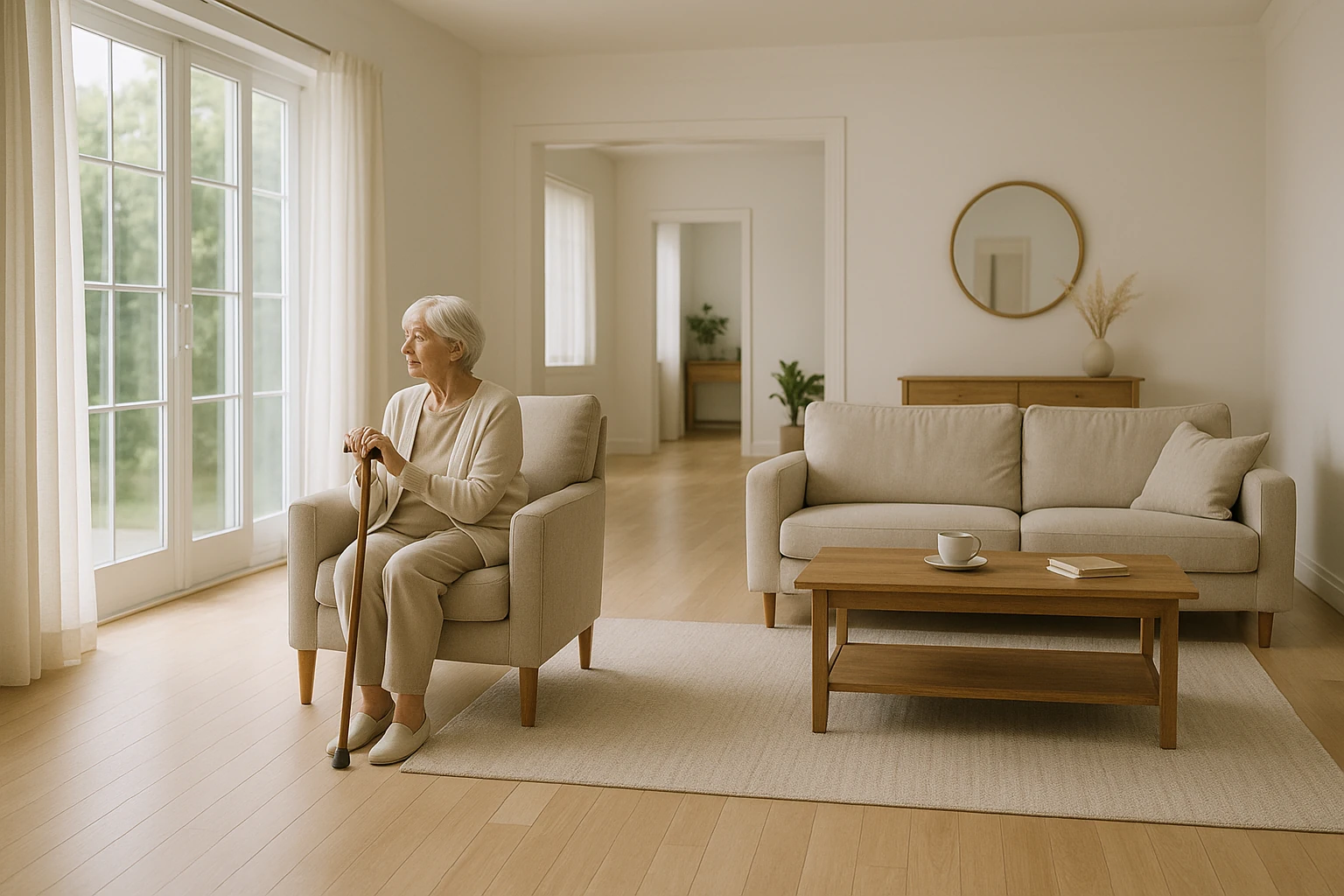
Relocating to Senior-Friendly or Disability-Adapted Housing
For many homeowners, a time comes when the home that once served them well no longer fits the life they are living today. Maybe the stairs are now a daily challenge. Maybe the bathroom doesn't feel safe. Maybe getting to the mailbox feels like a risk.
When health, mobility, or age-related needs change, the home must change too-or it starts to work against you.
That's why relocating to senior-friendly or disability-adapted housing is one of the most direct and effective solutions for regaining stability, reducing physical and emotional stress, and preparing for the next chapter with clarity and dignity.
This article explores the solution itself-not in theory, but in practical terms. No sales pitch. No pressure. Just honest evaluation so you can decide what fits your reality.

What Does This Solution Involve?
Relocating to senior-friendly or disability-adapted housing means selling your current home and moving into a property that is designed-or already modified-to meet your current or expected physical needs.
These homes typically include:
-
Step-free entrances or ramps
-
Single-level living (no stairs)
-
Wider doorways for mobility devices
-
Accessible bathrooms with grab bars, walk-in showers, or seated tubs
-
Lower countertops and reachable cabinets
-
Proximity to medical services or caregiver access
The goal is to live safely, comfortably, and with reduced daily effort, so your home supports your lifestyle-not the other way around.
Why This Solution Might Be Right for You
If you are experiencing any of the following, it may be time to consider this relocation strategy:
-
Daily mobility is getting harder or more dangerous
-
Parts of your current home are no longer usable (like stairs-only bedrooms)
-
You or a loved one requires medical support that's too far away
-
You live alone in a home that's difficult to maintain
-
Your current neighborhood lacks the support infrastructure you now need
Advantages of This Approach
Relocating to a senior-friendly or disability-adapted home brings benefits that go far beyond the square footage.
1. Reduces Physical Stress Every doorway that's too tight, every staircase you climb, every trip to the laundry room becomes a risk. Moving to a home designed for your needs removes these daily obstacles.
2. Improves Safety A properly adapted home reduces the chance of falls, burns, and accidents-helping you live more independently, for longer.
3. Enhances Peace of Mind You're not just buying convenience-you're protecting your dignity, your confidence, and your future. For many, the emotional weight that lifts after relocating is greater than expected.
4. Frees Up Time and Energy No more worrying about repairs, inaccessible layouts, or difficult cleaning routines. You can redirect your energy to relationships, hobbies, or rest.
5. Allows You to Plan on Your Terms Relocating while you're still able-not in response to a crisis-gives you control over the process, timeline, and choice of where and how to live.
What You Should Consider Before Deciding
This is not the right path for everyone. It requires making significant choices about your current home, and change-especially at a later stage in life-can be emotional.
Here are a few trade-offs to keep in mind:
-
You may need to sell a home full of memories. That's not easy.
-
Moving itself can be physically and mentally demanding.
-
You'll need to spend time researching suitable housing options that meet your needs and budget.
-
If your current home is not fully paid off, timing and equity will matter in your decision.
These challenges are real. But so is the relief many homeowners feel once they're finally settled into a space that feels safe, manageable, and aligned with who they are today.
If You're Considering This Move
This website offers dedicated resources to help you evaluate your situation. We do not provide direct consultations, phone assistance, or in-person services. But we do provide free, structured materials you can explore at your own pace-designed especially for homeowners dealing with life-altering changes such as health decline, disability, or aging.
If you're part of a supported group (such as low or median income, under distress, or facing economic hardship), you may also be eligible to explore guidance on how to select qualified professionals who can assist with relocation planning, real estate sales, or home search support. These materials are only accessible through this site and are reserved for those actively seeking clarity-not promotional services.
Final Thoughts
Your home should protect you, not challenge you. When your body changes, your home must adapt-or you must consider moving to one that already has.
Relocating to senior-friendly or disability-adapted housing isn't giving up-it's leveling up. It's about taking back control of your environment, reducing your stress, and creating a safer future for yourself and your loved ones.
If you're thinking about it, you're not alone. And you don't have to rush. But you do deserve the information needed to make the right decision-on your terms.
📚 Explore more about this solution and others by visiting the dedicated [Decision Support Library] on our website.
KING COUNTY REAL ESTATE HELP Clear paths for those facing real estate decisions in complex life situations.
Igor Pechkovskyi
Igor Pechkovskyi is a long-time Seattle resident and real estate professional who brings a research-driven, people-first approach to everything he does. With a background in business development and a deep knowledge of local housing markets, Igor contributes educational materials to KING COUNTY REAL ESTATE HELP to support homeowners facing difficult life transitions.
Having worked for years helping individuals navigate the complex world of home buying and selling, Igor understands how overwhelming housing decisions can become — especially during moments of financial or emotional hardship. His mission in this nonprofit work is simple: to share practical knowledge that empowers people to make clear, confident choices about their homes.